
Asian Canoe Confederation activities Q1 2026
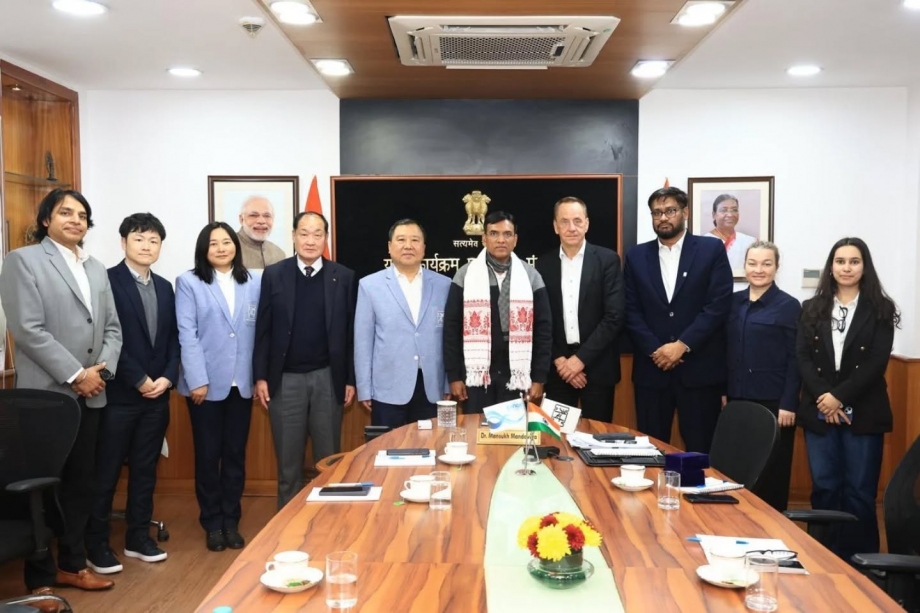
The first quarter of 2026 set a purposeful tone for the Asian Canoe Confederation, with a clear emphasis on leadership visibility, structured development, and meaningful engagement across the continent. Rather than isolated activities, the period reflected a series of connected efforts aimed at strengthening systems, deepening collaboration, and positioning Asian canoeing more assertively within the international landscape.
Presidential Visit to Uzbekistan and Technical Engagements
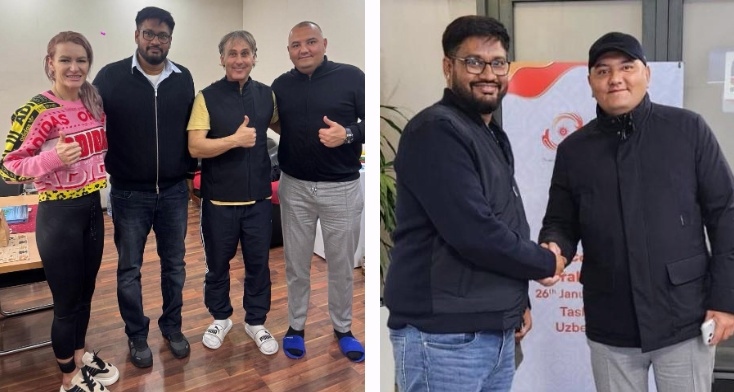
A central feature of the quarter was the visit of ACC President Mr. Prashant Kushwaha to Uzbekistan in January 2026, where he engaged closely with federation leadership, coaches, and technical representatives.
The discussions were enriched by interactions with key figures including Mr. Yusupov Bobur, Vice President of the Rowing and Canoe Federation of Uzbekistan, Mr. Andro Dushev, Head Coach, and Ms. Natasha Dushev Janich, three-time Olympic champion and coach. These engagements brought together experience from both administrative and high-performance perspectives, with conversations focusing on coach education, athlete development, and the strengthening of technical systems. The exchanges remained practical and forward looking, reflecting a shared understanding that long term progress in the sport will depend on consistent capacity building and structured international engagement.
Representation at the Olympic Council of Asia General Assembly
During the same visit, the President represented ACC at the 46th Olympic Council of Asia General Assembly in Tashkent on January 26. The Assembly provided an important setting for continental dialogue, bringing together senior leadership to reflect on the direction of sport in Asia. ACC’s presence ensured that canoeing remains part of these larger conversations as the region continues to evolve within the Olympic movement.
ACC Executive Committee and Board of Directors Meeting
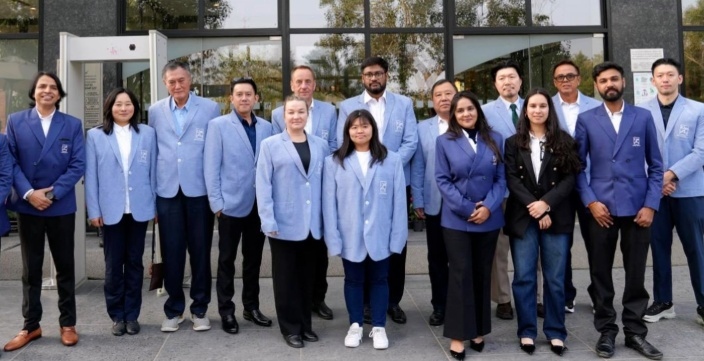
The Confederation’s internal momentum was equally evident in New Delhi, where the Executive Committee and Board of Directors convened during January 28 to 30 for their first meeting in India under the current leadership.
The gathering was not merely procedural, it was directional. With the participation of ICF President Thomas Konietzko, discussions moved beyond routine matters to focus on how the continent can build stronger structures, improve alignment with international systems, and create clearer pathways for athletes emerging from Asia.
Strategic Engagement with Government of India
A particularly significant engagement during this period was the joint meeting of ACC President Mr. Prashant Kushwaha and ICF President Thomas Konietzko with the Hon’ble Minister of Youth Affairs and Sports, Shri Mansukh Mandaviya. The discussion reflected a shared strategic vision, with emphasis on the development of Canoe Slalom infrastructure in India as part of its long-term Olympic aspirations for 2036.
During the interaction, it was highlighted that the development of a dedicated Canoe Slalom course would be an essential step in aligning with Olympic standards. The discussion also addressed the upcoming Commonwealth Games 2030, for which India holds hosting rights, where the inclusion of canoeing disciplines was strongly encouraged as a measure that could significantly strengthen the sport’s ecosystem and competitive base within the country.
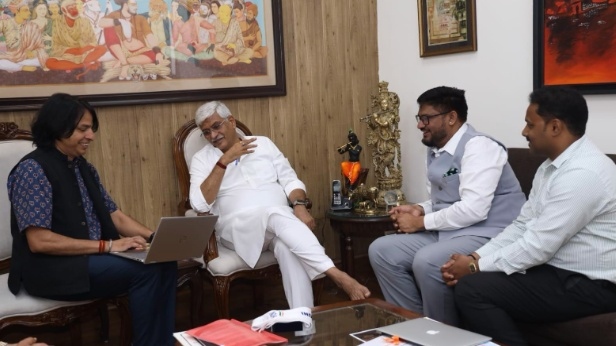
Further strengthening these engagements, the ACC President also met with Shri Gajendra Singh Shekhawat, Hon’ble Union Cabinet Minister of Tourism and Culture, Government of India. The discussion focused on the role of international sporting events in advancing tourism and cultural visibility. It reflected a shared understanding that hosting canoeing events at an international level can contribute meaningfully to positioning India as a global sporting destination, while simultaneously supporting the development of the sport.
Asian Canoe Slalom Championships and Thailand Open
On the competition front, the Asian Canoe Slalom Junior & U23 Championships, held from March 2 to 8 March alongside the ICF Canoe Slalom World Ranking Competition, Thailand Open, held from March 2 to 4 2026 in Pattaya Rayong, stood out as a defining event of the quarter. The scale and quality of participation reflected a noticeable shift in the depth of the discipline across Asia. Athletes from Kazakhstan, Japan, China, and Uzbekistan delivered particularly strong performances, while the broader field demonstrated increasing competitiveness across multiple nations.
What distinguished the event was not just participation, but the way it was conducted. The inclusion of formats such as kayak cross, with its structured progression from trials to elimination rounds, signalled a clear alignment with the evolving direction of the sport internationally. The technical delivery, supported by experienced officials, international jury members, and certified course designers ensured that the event met global standards, both in execution and competitiveness.

Afghanistan, Building Foundations Through Development
An important development at the grassroots level was reported from Afghanistan, where the Afghanistan National Canoe Federation successfully conducted its first ICF Level 1 Canoeing Coaching Seminar for local coaches.
This initiative marks a significant step towards establishing a structured coaching ecosystem within the country. By introducing internationally aligned coaching principles and technical knowledge, the programme aims to build a foundation for long-term athlete development and participation in the sport.
The seminar was delivered through a blended format, combining online theoretical sessions with practical on-water training at Qargha Lake in Kabul, which is emerging as a key centre for water sports in the country. Participation from multiple provinces reflected growing interest and engagement, indicating a positive shift towards expanding the sport’s reach.
Despite challenges related to infrastructure and resources, the initiative demonstrates strong commitment from the national federation to develop canoeing at the grassroots level. It also highlights the broader vision of ensuring that the growth of the sport in Asia remains inclusive, reaching emerging nations alongside established programmes.
Such efforts underline the importance of sustained development pathways, where investment in coaching and education becomes the foundation for future competitive success.
Tawangchu Tides, Unlocking New Frontiers for Paddle Sport
A defining highlight of the quarter was the successful hosting of the Tawangchu Tides International Kayaking Championship in Arunachal Pradesh, India, marking a significant step in expanding the geographical and strategic footprint of paddle sports within the region. Conducted in collaboration with the Government of Arunachal Pradesh and supported by the Indian Kayaking and Canoeing Association, the event brought international attention to a location of both sporting and strategic importance.
Set in Tawang, a high-altitude region with sensitive border proximity, the championship demonstrated the potential of sport as a means of engagement, development, and international outreach. The successful delivery of an international level kayaking event in such a location reflects not only logistical capability but also a broader vision of integrating sport with regional development and national priorities.
The event witnessed participation from athletes representing various countries, including a delegation from Mongolia, whose presence was enabled through coordinated efforts and facilitation by the Indian Kayaking and Canoeing Association, ensuring smooth participation and engagement throughout the championship.
Beyond the competition itself, the significance of Tawangchu Tides lies in what it represents for the future. The championship has opened a pathway towards identifying and developing untapped regions across India and Asia that possess natural potential for paddle sports but remain underutilised. Efforts are now being directed towards assessing such locations with the aim of creating new international competition venues and training hubs.
This initiative reflects a forward-looking approach, where sport is not confined to established centres, but actively expanded into new terrains, creating opportunities for athlete development, regional engagement, and global participation. Tawangchu stands as an example of how emerging locations can be brought into the international sporting framework with the right vision and collaboration.
International Coaching Education Programme, Bhopal
Parallel to competition, the Confederation invested significantly in strengthening its technical base. The International Coaching Education Programme, ICEP, held in Bhopal from March 17 to 22 brought together approximately 70 coaches and combined both Canoe Sprint and Canoe Slalom disciplines within a single, integrated learning platform.
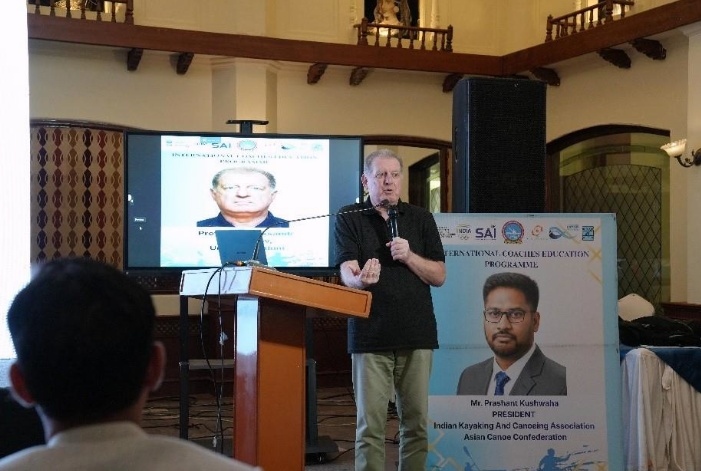
What gave the programme its real depth was the quality of expertise involved. International faculty including Dr Alexandr Nikonorov, Csaba Szanto, Zak Mahmoudi, Jean-Michel Prono, Katerina Salandova, and Enkhjargal Jigdjidsuren led sessions across performance science, biomechanics, and training systems. Alongside them, slalom focused sessions were delivered by experienced practitioners, ensuring that coaches received discipline specific exposure across both flatwater and technical whitewater formats.
The structure of the programme allowed for a balance between theory and application, with on-water sessions at Bhopal’s Lower Lake providing direct, hands on engagement.
More importantly, it created a space where international methodologies could be contextualised within Asian conditions, something that remains critical for long term athlete development.
Beyond events and programmes, ACC also moved to strengthen its internal communication systems. Multiple WhatsApp based communities were initiated across different functional areas, including slalom, media, and other technical domains.
These platforms are designed not as informal groups, but as working channels, intended to improve coordination, share timely information, and create a more connected continental network across athletes, coaches, officials, and administrators.
With a view towards upcoming multi-sport events, the Confederation has also initiated focused efforts in relation to the Asian Games 2030 in Doha and 2034 in Riyadh. Dedicated working groups and Committees have been constituted to engage with relevant stakeholders and ensure the active inclusion and effective representation of canoeing disciplines within these editions.
These efforts reflect a proactive approach towards strengthening the sport’s presence within major continental platforms, while also extending technical and organisational support, wherever required, to contribute to the successful delivery of the Games.
Way Forward
Taken together, the first three months of 2026 reflect a phase of consolidation with intent. The Confederation has not only remained active across multiple fronts, but has done so with a clearer sense of direction, linking leadership engagement, competition, and development into a more coherent framework. As the year progresses, the focus will remain on building consistency within these efforts, while continuing to expand Asia’s presence within the global canoeing system.
By Prashant Kushwaha, President of the Asian Canoe Confederation
Latest posts
Labels
Blog archive
July
April
December
October
July
April
December
September
June
RSS