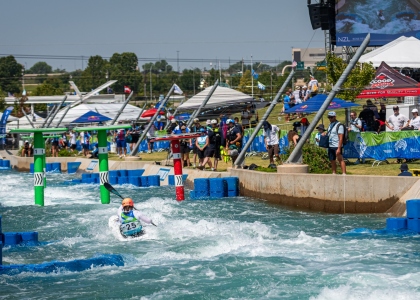

International Canoe Federation Vice President Lluis Rabaneda used the inaugural World Cup Diplomacy Summit in New York, United States, to highlight how Olympic paddle sport venues continue to deliver lasting benefits to communities long after the Olympic Games have ended.
Speaking at the United Nations headquarters, Rabaneda outlined how Olympic paddle sport venues can become powerful engines for long-term development, supporting participation, tourism, economic activity and community wellbeing for decades after the world's greatest athletes have left.
The summit took place just a day before the ICF Canoe Slalom World Cup Series resumes with the second leg in Prague, Czechia from June 5 to 7.
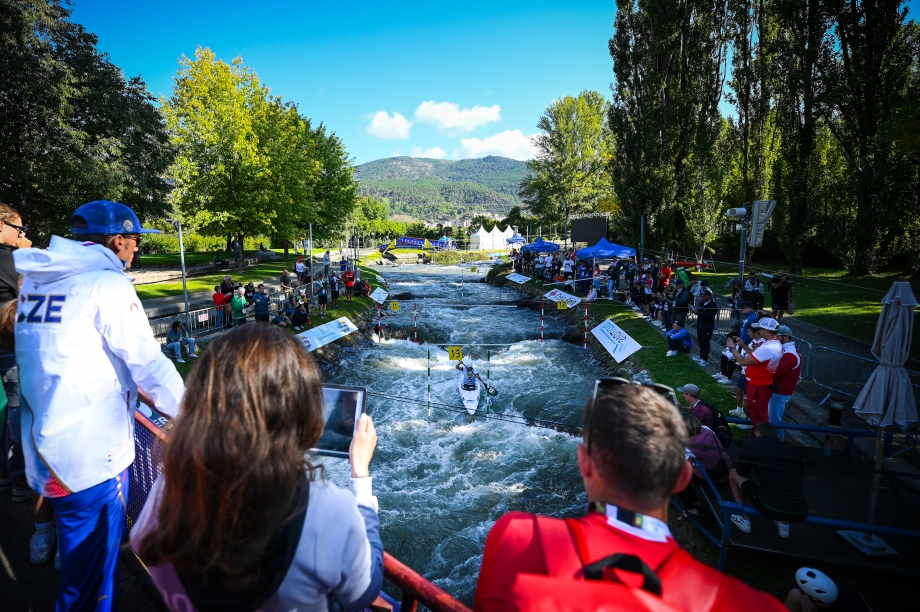
The series is taking place at multiple venues that continue to endure lasting impact, including Augsburg, La Seu and Vaires-sur-Marne which staged Olympic competition at Munich 1972, Barcelona 1992 and Paris 2024, respectively.
La Seu's Parc Olympic del Segre will be the host of this year's ICF Canoe Slalom World Cup Final.
At the heart of Rabeneda’s message at the summit in New York was the belief that sports infrastructure should be designed first and foremost for people and communities.

While Olympic and international events provide an important catalyst for investment, the true measure of success is the long-term impact venues have on local residents, athletes, businesses and future generations.
Making the case for sports infrastructure as a driver of broad-based development, Rabaneda argued that well-planned paddle sport venues create far more than sporting opportunities.
They stimulate local economies, support employment, encourage healthy lifestyles, attract visitors and investment, and provide safe and accessible spaces for people to connect with water and nature.
He also emphasised that paddle sport venues can become powerful community assets, bringing together people from different cultures, backgrounds and generations. Beyond competition, they create opportunities for recreation, education, tourism and environmental engagement, while strengthening the social fabric of the communities they serve.
To demonstrate this legacy in action, Rabaneda pointed to several Olympic and international paddle sport venues in the Pyrenees on both the Spanish and French sides of the border. Facilities such as Segre Olympic Park, the Sort Freeride Stadium and venues in the French city of Pau continue to serve as international training and competition centres while supporting tourism, economic development and population retention in rural mountain communities.
These venues demonstrate how investment in paddle sport infrastructure can generate benefits far beyond the field of play. Decades after major events have concluded, they remain active centres of participation, economic activity and community life, attracting visitors, supporting local businesses and creating opportunities for future generations.
Central to Rabaneda's presentation was a call for stronger collaboration between International Federations, National Olympic Committees, governments and local authorities. He argued that the most successful paddle sport venues are those developed through long-term partnerships and guided by a shared vision that balances sustainability, community use and international sporting ambitions.
The discussion formed part of the first sports diplomacy summit ever organised by the United Nations, bringing together around 50 experts from the worlds of sport, diplomacy and international relations.
Convened by the United Nations Institute for Training and Research (UNITAR) within the framework of the 2026 FIFA World Cup jointly hosted by the United States, Mexico and Canada, the summit explored how sport can contribute to diplomacy, peacebuilding and sustainable development.
In his presentation, Rabaneda also championed the role of sport as a powerful tool for peace, progress and international cooperation as part of the White Paper on Sports Diplomacy promoted by UNITAR.
He welcomed the growing recognition of sport and Olympism within the United Nations system, noting that sport has an increasingly important role to play in building stronger communities, fostering international understanding and supporting sustainable development.
Rabaneda concluded by thanking UNITAR for the opportunity and called on stakeholders to continue strengthening the connection between sport, diplomacy and development.
"The true legacy of Olympic paddle sport venues is not measured by the medals won there, but by the opportunities they create for communities long after the event has ended," said Rabaneda.
"When developed with a long-term vision, these venues become lasting assets that support participation, economic growth, social cohesion and a lifelong connection with water."
The ICF’s strategic vision, as outlined in its Fit For Future plan, places significant emphasis on leveraging whitewater venues to contribute to sustainable development goals.
These venues play a crucial role in generating revenue, promoting citizen welfare and accelerating climate and environmental objectives.
Check out the ICF's Whitewater Venues - Advancing Urban Sustainability report by clicking here.
Related links