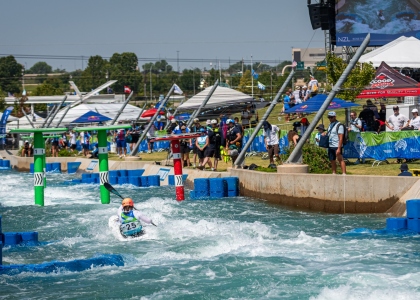

Slovenia has long been one of Canoe Slalom’s great medal contenders, producing world-class athletes and Olympic success stretching back to the 1992 Olympic Games, in which six athletes competed for the nation.
The small central European country, populated with just two million people, gained its first Olympic medal back at the 1996 Games in Atlanta – as Andraz Vehovar made history.
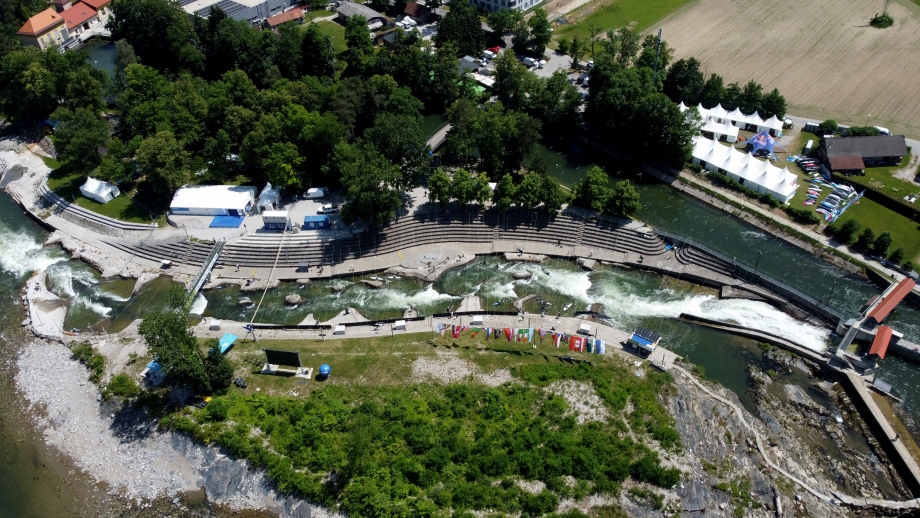
At the heart of that legacy lies the Tacen Whitewater Course in Ljubljana, where generations of paddlers have honed their craft before rising to the sport’s biggest stages.
With legends of the sport inspiring young athletes across the country, Slovenia’s production line of talent shows no sign of slowing.
Now, a new generation is emerging to carry the torch. Among them are siblings Eva Alina Hocevar and Ziga Lin Hocevar, whose rapid rise has seen them collect medals with remarkable consistency and challenge reigning world champions on the international stage.

If their early achievements are any indication, the future of Slovenian Canoe Slalom is in very capable hands.
For Slovenian paddlers, Tacen is far more than a competition venue. It is the beating heart of the nation's Canoe Slalom community.
Generations of athletes have grown up on its waters, learning the sport alongside friends, rivals and role models.
Long before they compete on the world stage, many Slovenian paddlers spend years at Tacen, developing their skills on the same course that helped shape Olympic medallists and world champions.
The course hosted its first competition in 1939, when the venue was a little more than a natural rapid flowing from the Sava River. Nearly 50 years later, it underwent a major reconstruction, transforming it into the world-class venue that athletes and spectators know and love today.
That deep connection is felt by athletes of every generation.
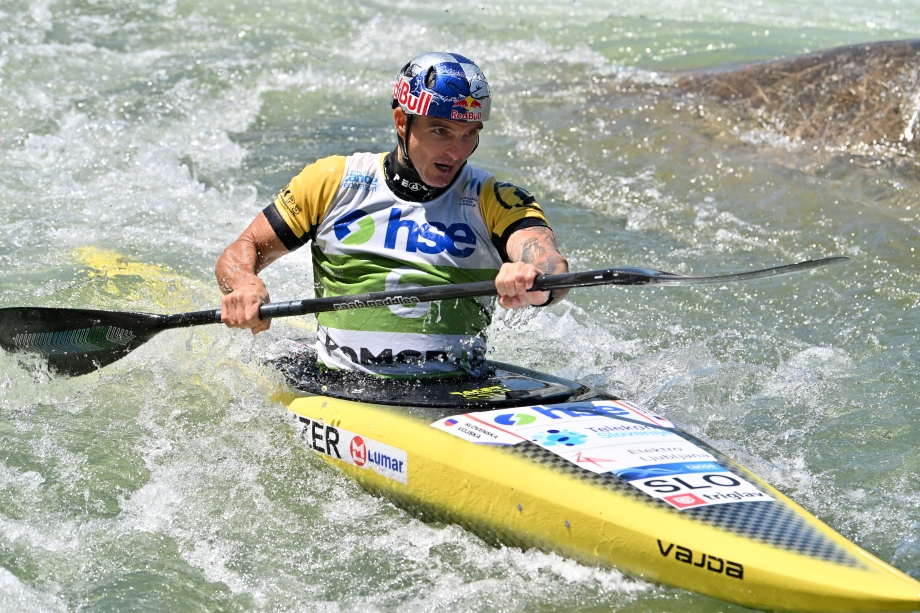
“It always feels nice to race at home. The start of the course is really famous all around the world,” said Peter Kauzer, who took Olympic silver at Rio 2016.

“From the beginning you go at full speed, and when the crowd starts cheering, it gives you that extra push down the course.
“Even though the last couple of seasons haven’t been my most favourable races, it still feels special.”
Tokyo 2020 Olympic champion Benjamin Savsek echoed those sentiments, highlighting the unique atmosphere created when Slovenia’s Canoe Slalom community gathers around its most iconic venue.
“Competing here on my home course always creates a really good atmosphere because a lot of people and supporters come to watch our races,” he said.
“I’ve grown up close to this course, so I feel more confident because I know it really well. But on the other side, there is also more pressure because of all the spectators. You want a really good result in front of the home crowd.
“The spectators are really close to the course, so they can see the effort from start to finish. That makes the atmosphere even better.
“For me as an athlete, racing here is always special because of that.”

The significance of Tacen extends beyond the current generation. For nearly three decades, the course has been intertwined with Slovenia’s rise as a Canoe Slalom nation.
Among those returning to the venue this weekend was Andrej Vehovar, whose silver medal at the Atlanta 1996 Olympic Games marked a watershed moment for Slovenian slalom and inspired countless athletes who followed.
“To me, at that moment, it really meant a lot,” Vehovar said.
“I'd been dreaming about that time for 25 years. But it was also the end of a journey. A big journey, a lot of training, big goals and a lot of effort. So, when an athlete achieves something like that, somehow a burden comes off.”
Looking back on the sport three decades later, Vehovar believes Canoe Slalom has evolved dramatically, with athletes pushing technical boundaries further than ever before.
“The biggest change I can see is that athletes are doing harder things on the course,” he said.
“When I think about our times, it was almost romantic.”
Yet while techniques, equipment and racecourses have changed, the role of Tacen in developing elite athletes has remained constant.
Today, the venue continues to nurture the next generation, with young paddlers training on the same waters that helped shape Slovenia’s Olympic medallists and world champions.
Vehovar sees a bright future ahead.
“The current generation are amazing,” he said.
“When I see somebody who battles as nicely as the generation of the moment, technical perfection, great feeling. These guys are having a really bright future.”
His advice to those hoping to follow the path of Slovenia’s greats is simple.
“Usually everybody is saying, just follow your dreams. Sometimes it sounds stupid, but at the bottom line, at the end, it's really like that.
“This is probably the most important thing, and when you're passionate about one thing, you're fully committed.”
As the Hocevar siblings and their contemporaries continue their rise, Tacen remains the constant thread connecting Slovenia’s past, present and future.
From Vehovar’s breakthrough Olympic medal in Atlanta to the ambitions of the country's newest stars, the venue has helped shape generations of paddlers.
More than just a whitewater course, it has become a cornerstone of the community and a symbol of Slovenia’s enduring success in Canoe Slalom.
Related links